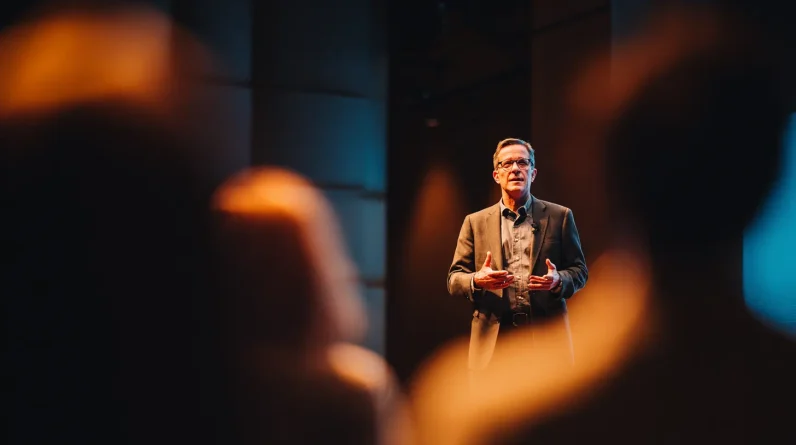
We’ll show you how to command attention through vocal mastery, strategic silence, and purposeful movement. Vary your pitch, pace, and volume to emphasize key points. Stand with confidence, use deliberate gestures, and maintain eye contact across the room. Build rhythm through pauses that let ideas land. Open bold, avoid apologizing, and close with a clear call to action. These techniques separate forgettable speakers from those who move audiences—and we’ve got the specifics on how to master each one.
Master Vocal Dynamics to Cut Through the Noise
When you’re speaking to an audience, monotone delivery will put them to sleep—no matter how compelling your content is. We’ve got to master varying vocal tonality to engage listeners and sustain their attention throughout our presentation.
Here’s what works: strategically shift your pitch, pace, and volume to emphasize key points. Slow down for complex ideas, accelerate for momentum, and drop your voice for intimacy. These adjustments aren’t gimmicks—they’re essential tools for projecting confidence and authenticity.
Practice recording yourself speaking. You’ll identify where you’re flat or rushed. Target those passages and experiment with different vocal approaches until you find what feels natural yet commanding. We cut through noise not by shouting, but by controlling our vocal instrument with precision and purpose.
Command the Room With Purposeful Body Language
Your vocal mastery means nothing if your body’s sending contradictory signals. We’ve got to align our physical presence with our message.
Start with deliberate posture. Stand with shoulders back, feet shoulder-width apart, and weight balanced. This stance projects confidence and stability. Avoid fidgeting, pacing aimlessly, or leaning—these undermine credibility.
Movement must serve purpose. We gesture to emphasize key points, not fill silence. Keep gestures within our frame, deliberate and controlled.
Maintain natural expression. Our face should reflect our message’s emotion and intent. Make eye contact with different audience members, holding three to five seconds per person.
Our hands shouldn’t hide in pockets or cross defensively. Open palms signal honesty and engagement. Every movement reinforces our words.
Master body language, and we command attention without saying anything.
Use Strategic Silence and Pacing to Build Impact
While body language commands visual attention, silence commands mental attention. We’ve all experienced speakers who rush through their material, denying audiences time to absorb key points. Strategic silence works differently.
Rhythmic pauses create space for ideas to land. When we pause after important statements, we let audiences process and internalize. This technique transforms information into impact.
Varied tempo keeps listeners engaged. We alternate between measured delivery and quickened pace, creating dynamic rhythm that maintains focus. Slower pacing emphasizes critical content; faster delivery builds momentum.
Master these elements by mapping pauses into your speech. Identify moments where silence serves your message. Practice until rhythmic pauses feel natural, not forced. You’ll notice audiences lean in during silence, hanging on your next word. That’s command.
Build Trust Through Authentic Eye Contact and Connection
Because silence creates space for absorption, eye contact fills that space with presence. We build trust by meeting our audience’s gaze directly, signaling sincere listening and genuine engagement. This isn’t theatrical—it’s authentic connection.
Practice distributing your eye contact evenly across the room, landing on individual faces for three to five seconds. This technique prevents the appearance of scanning or favoring particular audience members.
Share personal anecdotes while maintaining eye contact. When we recount meaningful experiences while looking at our listeners, we invite them into our narrative rather than merely reporting it. They sense our vulnerability and investment.
We’ve discovered that audiences remember speakers who see them. Your focused attention transforms a presentation into a dialogue, establishing the credibility and rapport that command sustained attention and inspire action.
Harness Gesture and Movement to Reinforce Your Message
Just as eye contact creates presence, deliberate gestures and purposeful movement amplify our message and keep audiences engaged.
We’re sharpening our delivery by mastering two critical elements:
- Purposeful posture anchors credibility—we stand grounded, shoulders back, projecting confidence that commands respect
- Expressive hands illustrate concepts; we gesture within our frame, avoiding distracting fidgets that undermine authority
- Strategic movement connects us to different audience sections; we navigate the space intentionally, never pacing nervously
These techniques aren’t theatrical flourishes—they’re precision tools. Our gestures must match our words; when they’re misaligned, audiences sense incongruence and disengage.
We practice until movement feels natural, never scripted. This integration of body language with vocal delivery creates the seamless presence that separates competent speakers from commanding ones.
Create Your Opening and Closing Moments That Stick
Our audiences decide within seconds whether we’re worth their attention, and they remember how we leave them—making our opening and closing moments the bookends of speaker credibility. To establish initial impact, open with a bold statement, relevant question, or surprising fact that immediately commands focus. Avoid apologizing or warming up your audience; dive straight into substance. For your closing, don’t fade out with “thank you.” Instead, conclude with a call to action that moves listeners toward specific next steps. Whether that’s adopting a new perspective, implementing a strategy, or engaging further, make the desired outcome crystal clear. Your final words should echo in their minds long after you’ve left the stage.
Conclusion
We’ve explored how vocal dynamics, body language, strategic silence, eye contact, gesture, and memorable bookends transform your presence. Here’s what matters: research shows 55% of communication impact comes from nonverbal elements alone. We can’t afford to neglect them. You’ve got the techniques now. It’s time we implement them intentionally in every presentation, turning nervous energy into commanding authority that genuinely moves our audiences.