


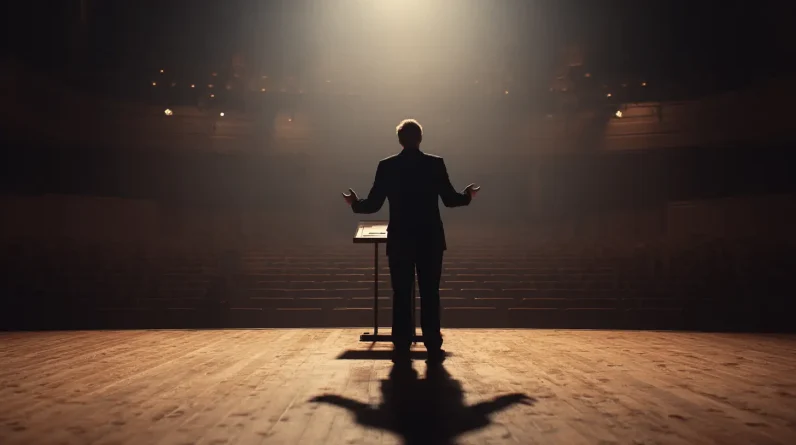
We’ll help you transform nervousness into commanding presence through five core strategies. Master your content so thoroughly you can explain it without notes. Tailor your message to your audience’s specific pain points and aspirations. Develop confident body language, vocal variety, and strategic eye contact. Practice in realistic conditions with honest feedback. Finally, establish a pre-speech routine with deep breathing and visualization. These foundations work together, and we’ve got specific techniques that’ll show you exactly how.
Master Your Content Inside and Out
When we truly know our material, we’ll project confidence that naturally engages our audience. Start by identifying and highlighting key points that form your speech’s backbone. Understand not just what you’re saying, but why each element matters to your listeners.
Rehearse thoroughly—multiple times and in varied settings. Practice aloud, not silently, so you’re familiar with how words sound and flow. Record yourself to catch awkward phrasing or rushed sections. Time your delivery to verify you’re meeting your slot requirements.
Test yourself by explaining concepts without notes. Can you answer unexpected questions? This deep mastery transforms you from someone reciting words into a genuine expert sharing valuable insights. Your preparation becomes invisible to the audience, leaving only your credibility and command visible.
Know Your Audience and Tailor Your Message
Because every audience brings different expectations, backgrounds, and concerns to your presentation, we’ll dramatically strengthen our impact by tailoring our message to their specific needs. Start by analyzing demographics—age, profession, education level, and industry—to shape relevant examples and language. Consider cultural context carefully; what resonates in one culture may alienate in another. We’ll craft stories and references our listeners recognize, making abstract concepts tangible. Research their pain points and aspirations beforehand. Ask yourself: what does this audience care about? What problems do they face? Answer these questions, and we’ll deliver messages that feel personally crafted rather than generic. This targeted approach transforms presentations from forgettable broadcasts into meaningful conversations.
Develop a Strong Physical Presence and Delivery
While tailored content captures your audience’s minds, your physical presence and delivery capture their attention and trust. We’ll master this critical dimension through deliberate practice.
Here’s what we need to develop:
- Confident body language—maintain an open posture, make purposeful gestures, and own your stage space
- Expressive vocal variety—modulate pitch, pace, and volume to emphasize key points and maintain engagement
- Strategic eye contact—connect with audience members throughout the room to build rapport
- Deliberate pausing—use silence to let ideas land and give yourself breathing room
We’re not performing for applause; we’re commanding respect through authentic presence. Practice these elements until they’re second nature, transforming nervous energy into magnetic authority that compels your audience to listen.
Practice Under Realistic Conditions
Now that you’ve internalized the mechanics of physical presence, it’s time to stress-test your delivery in conditions that mirror the real world. We recommend recording yourself to identify gaps between intention and execution. You’ll catch vocal patterns, pacing issues, and physical tics that audiences notice but you won’t in isolation.
Next, visualize the speech in authentic settings. Picture the actual venue’s acoustics, lighting, and audience composition. Practice standing on stage, managing your notes, and maneuvering through transitions under pressure.
Rehearse before trusted peers who’ll provide honest feedback. Vary your practice environments—different rooms, lighting conditions, and audience sizes build adaptability. This deliberate, rigorous preparation transforms nervous energy into controlled confidence, ensuring you’ll deliver masterfully when it matters most.
Build a Pre-Speech Routine That Works for You
All the preparation you’ve done means nothing if you’re frazzled minutes before stepping on stage. We’ll develop a routine that centers you and releases your readiness.
Build your pre-speech ritual around these elements:
- Focus on breathing – Practice deep, deliberate breaths to calm your nervous system and ground yourself mentally
- Establish confident stance – Stand with shoulders back and feet shoulder-width apart to activate your physiology
- Visualize success – Mentally rehearse your opening moments and key changes flawlessly
- Review core messages – Quickly scan your main points to anchor your delivery
We’re not looking for rigid formulas here. What matters is consistency. Test different combinations until you’ve discovered what genuinely settles your mind and strengthens your presence. Your routine becomes your competitive edge—the invisible anchor that transforms nervous energy into commanding performance.
Conclusion
We’ve walked you through the essentials—master your content, know your crowd, and perfect your delivery. Now here’s the truth: practice doesn’t make perfect; it makes permanent. So rehearse realistically and build rituals that calm your nerves. You’re ready to own that stage. Remember, you’ve got this. Trust your preparation, breathe, and let your authentic voice shine through. Your success is waiting.






